The basics for every game
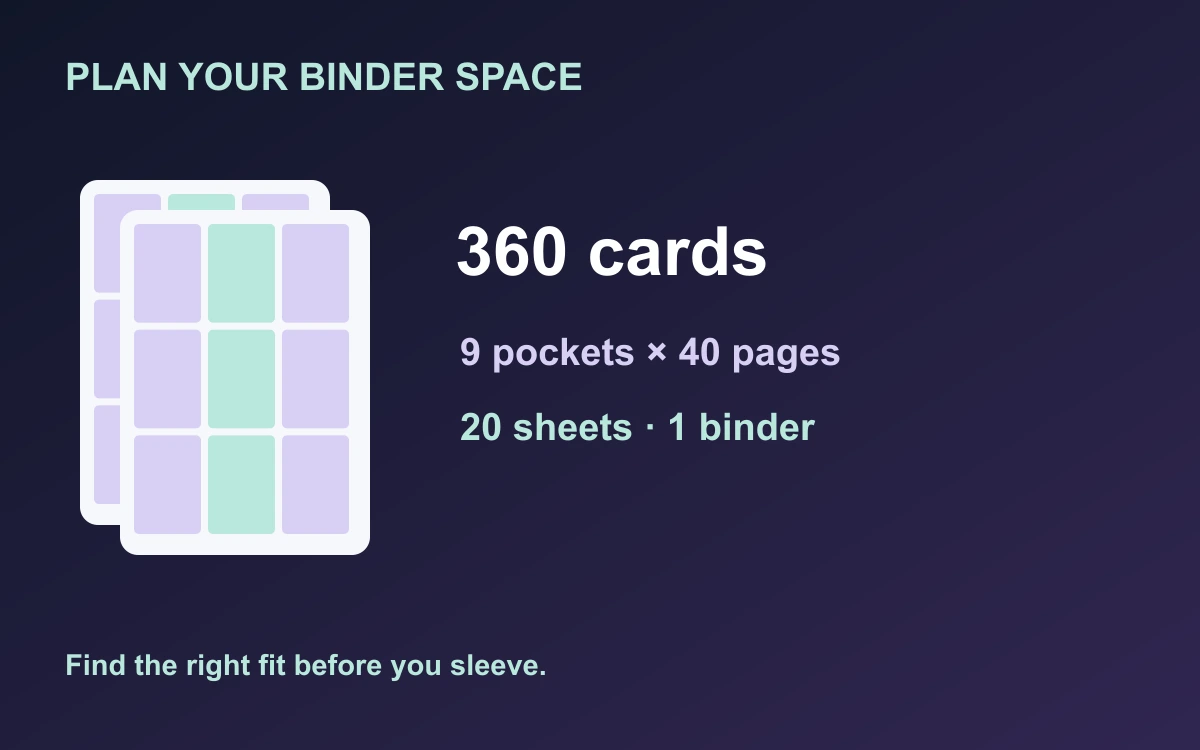
- Standard-size cards. All four games use standard-size cards, the same size as Pokémon, so regular 4, 9 and 12-pocket binders fit them.
- Switch the search to your game. Choose it under Settings → Card game mode, or use the start buttons on this page, which switch it for you. binder.studio then searches that game's card database: OPTCG API for One Piece, Scryfall for Magic, GATCG for Grand Archive and RiftCodex for Riftbound.
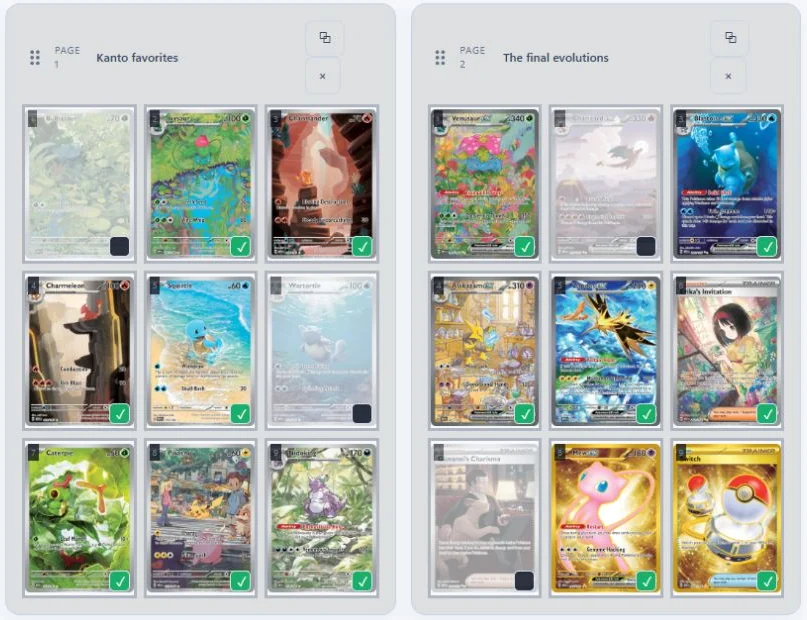
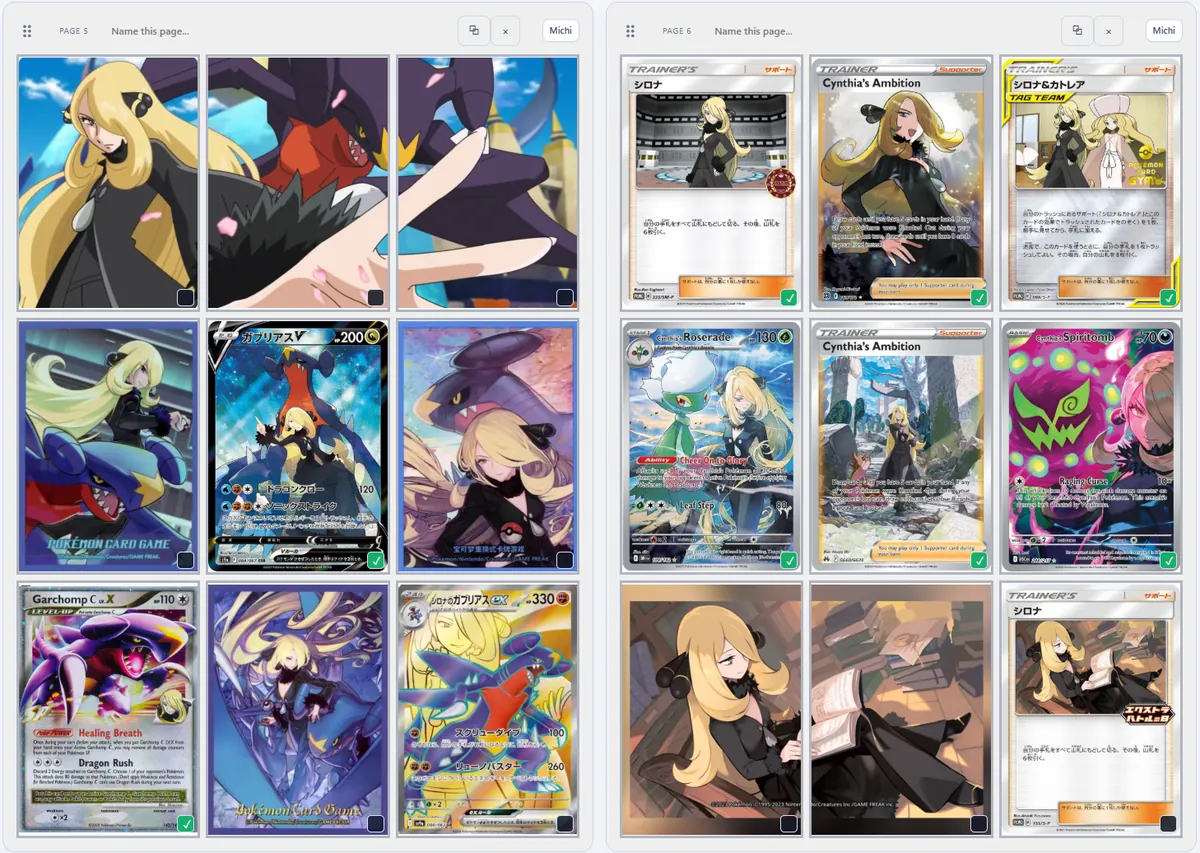
- Mix games on one page if you like. A "favorites" page can hold a Pokémon card next to a Zoro leader and a Lightning Bolt.
- Tick ✓ what you own. Unowned cards stay faded, and your collection checklist works for every game.
One Piece Card Game
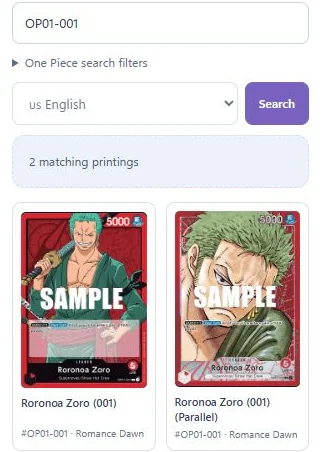
One Piece card numbers combine the set and the card, like OP01-001 for Roronoa Zoro. Rarities run Common, Uncommon, Rare, Super Rare (SR) and Secret Rare (SEC). Leaders (L) are their own category: every deck has one, and it sets the deck's colors.
The cards collectors chase most are the alternate-art versions. Parallel printings share a number with the regular card. The Manga Rare or Super Parallel treatment goes on a few special cards, and Treasure Rares sit above the regular rarity scale.
Binder ideas
- A leader binder. One pocket per leader across every set. It's a compact collection that tells the whole game's story.
- Regular and parallel side by side. In a set binder, put each parallel on the facing page next to its regular version.
- A crew page. The Straw Hats, the Emperors or the Worst Generation fill a 9 or 12-pocket page nicely.
- A color binder. Group cards by deck color (red, green, blue, purple, black and yellow) to see your options for each leader.
Magic: The Gathering
Magic cards have a collector number within each set, and many cards come in several treatments:
- Showcase: an alternate frame tied to the set's theme.
- Borderless: the art fills the card face.
- Extended art: the art runs past the frame into the margin.
- Foil and etched foil: different finishes on the same card.
- Serialized: individually numbered copies, like 123/500.
Binder ideas
- A Commander binder. A 100-card Commander deck fits on 9 pages of a 12-pocket binder, so you can keep the deck's "binder copy" next to its upgrades.
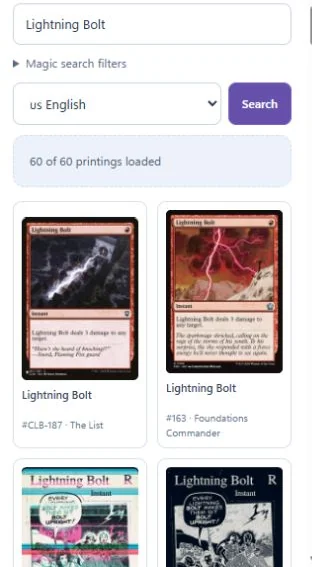
- Every printing of one card. Lightning Bolt has dozens of printings. Search it in binder.studio and lay them out by year.
- A treatment page. Put a set's showcase or borderless cards together to see the whole art style at once.
- An artist binder. Magic artists have huge followings. Scryfall syntax like
a:"Rebecca Guay"works in the binder.studio search.
Grand Archive
Grand Archive decks are built around a champion, and popular champions are printed in many editions across sets and promos. The top collector rarities each have an overframe art treatment:
- Collector Super Rare (CSR) adds a gold artist signature stamp.
- Collector Ultra Rare (CUR) adds unique signature stamps and a serial number.
- Collector Promo Rare (CPR) is given out at special events.
Binder ideas
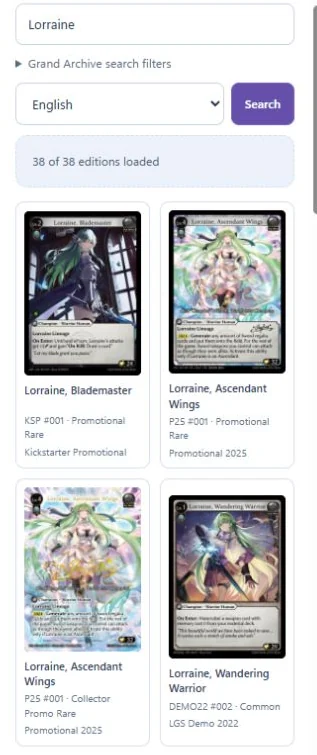
- A champion binder. Every edition of one champion, like Lorraine, in release order.
- A collector rare showcase. Use a 4-pocket binder for CSRs and CURs so the overframe art gets room.
- A set binder by element. Group each set's cards by element to see how a set fits together.
Riftbound
Riftbound is Riot Games' League of Legends trading card game. Its first set, Origins, has 298 cards numbered 001 to 298, so the main set fills 34 pages in a 9-pocket binder. Rarities are Common, Uncommon, Rare and Epic, and every Rare and Epic is foil.
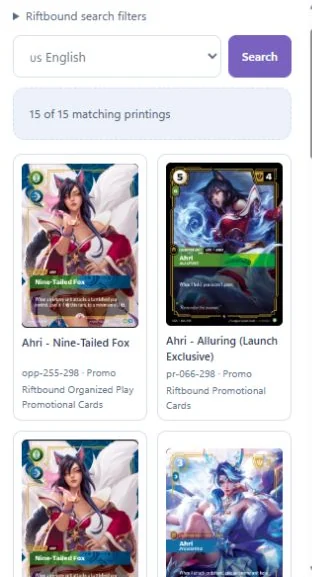
The chase cards are the champion variants. Each core champion has an alternate-art champion unit and an Overnumbered legend numbered 299 and up, and some Overnumbered cards carry a foil artist signature.
Binder ideas
- A page per champion. Champion unit, alt art, legend and Overnumbered fit on one 4 or 9-pocket page, and the core champions make a tidy binder.
- A set binder with the Overnumbered cards last. Number order first, then the 299+ cards as a finale spread.
- A region binder. Group champions by their Runeterra region for a binder that reads like the game's world map.
Sources
- Collectability in Riftbound: Origins (Riot Games)
- The Collector Rares of Dawn of Ashes (Grand Archive)
- Magic card treatments guide (Scrytics)
- One Piece Card Game rarity guide (Geeky Domain)